Present Your Designs with a Realistic Wirebound Notebook Mockup for Canva
Bringing a digital planner or ebook cover to life requires more than a flat image. You need context. You need texture. You need a presentation that lets your audience feel the weight of the paper and the spiral binding in their hands, even through a screen. This is where a high-quality wirebound notebook mockup for Canva becomes an indispensable part of your creative toolkit. It’s not just a template; it’s a bridge between your digital design and its physical, tangible reality.
Beyond Flat Graphics: The Power of Tangible Presentation
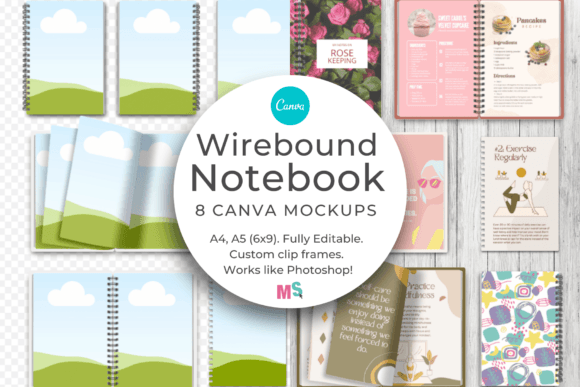
Think about the last time a product photo stopped your scroll. Chances are, it wasn't a sterile, white-background shot. It was an image that told a story—a coffee-stained notebook on a wooden desk, a planner open to a beautifully designed weekly spread, an ebook cover held in someone's hands. This wirebound notebook mockup for Canva captures that exact essence. It provides a photorealistic, customizable scene where your designs aren't just placed, but presented.
The visual style is clean, modern, and incredibly versatile. The mockup features a classic spiral-bound notebook, meticulously crafted with realistic shadows, lighting, and textures. You can almost see the slight imperfections in the paper grain and the metallic sheen of the wire binding. This attention to detail is what separates a professional mockup from a simple clip frame. It doesn’t just display your work; it elevates it, giving your A4, A5, 6×9, or letter-sized layouts an immediate sense of professionalism and perceived value.
Practical Applications for Creators and Marketers
The true strength of this design asset lies in its flexibility. For entrepreneurs and small business owners launching a new planner, this mockup is a game-changer. Instead of spending hours and budget on a photoshoot, you can create stunning product images for your Etsy shop, website, or Amazon listing in minutes. Drag your cover design into the front frame and a sample interior page into the back, and you have a compelling hero image ready for your sales page.
For designers and marketers, it’s a powerful communication tool. Presenting a client’s ebook design in a flat PDF can feel underwhelming. By using this wirebound notebook mockup for Canva, you instantly show them the end result. “Here’s how your cover will look as a printed spiral-bound book,” is a far more persuasive statement than, “Here’s the front cover file.” It helps bridge the imagination gap, leading to faster approvals and happier clients. Social media managers and bloggers can also use it to create engaging content—think “behind-the-scenes” of a new digital product launch or a styled flat lay featuring your latest workbook.
How to Use This Mockup: A Seamless Canva Workflow
One of the biggest advantages of this product is its integration with Canva. You don’t need to master complex software like Photoshop. The process is designed to be intuitive, even if you’re new to mockups.
- Access Your Template: After downloading the user PDF, navigate to the last page. There, you’ll find a direct link that opens the fully editable mockup template right inside your Canva account.
- Customize with Drag-and-Drop: The template uses custom-created clip frames. Simply click on the frame for the front cover, then drag your design file from your uploads panel and drop it into place. Canva’s “Position” and “Resize” tools let you adjust it perfectly.
- Edit the Scene: The background and surrounding elements are also editable. You can change the background color, move the notebook, or even add other Canva elements to create a unique scene that matches your brand aesthetic.
- Download and Share: Once you’re satisfied, download your high-resolution image as a PNG or JPG. It’s ready for your website, portfolio, social feed, or client presentation.
This workflow eliminates the technical barriers. The focus shifts from “how do I use this tool?” to “what story do I want my design to tell?” It’s a practical solution that respects your time and creative energy.
Making the Most of Your Design Asset
To ensure your final images have maximum impact, consider a few design principles. First, think about visual hierarchy. Your cover design should be the clear focal point. Use the mockup’s lighting to your advantage—ensure your design’s key elements are well-lit and readable. Second, consider brand consistency. If your brand uses a specific color palette, choose a background that complements it. The goal is for the mockup to feel like a natural extension of your brand identity, not a foreign element.
While the mockup itself is a powerful design asset, its effectiveness hinges on the quality of the work you put into it. A beautifully typeset cover using a balanced font pairing—perhaps a strong serif font for the title and a clean sans serif font for subtitles—will shine in this presentation. The mockup provides the stage; your typography and layout are the performers.
Finally, remember the licensing. As outlined in Creative Fabrica’s terms, this mockup is for creating end products and promotional materials. You cannot resell the mockup template itself or incorporate it into a new template for sale. This protects the value of the asset for all users. For any commercial use beyond standard promotion, a quick review of the terms ensures you’re using this fantastic resource correctly and ethically.
In the end, this wirebound notebook mockup for Canva is more than a convenience. It’s a strategic tool for anyone serious about presenting their creative work with the polish and professionalism it deserves. It helps you sell, impress, and communicate your vision effectively, turning flat designs into compelling stories.