Streamline Your Workflow with an Architecture Title Block Template
In the world of architectural design and interior planning, precision and professionalism are non-negotiable. Whether you are drafting floor plans, creating detailed elevations, or finalizing construction documents, the consistency of your presentation speaks volumes about your expertise. For professionals and enthusiasts using AutoCAD, establishing a reliable foundation is the first step toward a flawless final product. This is where the value of a robust Architecture Title Block Template becomes immediately apparent. It is not merely a decorative border; it is the structural backbone of your technical drawings, ensuring that every sheet you print or share carries the necessary data and visual coherence required in the industry.
The Anatomy of a Professional Drawing Package
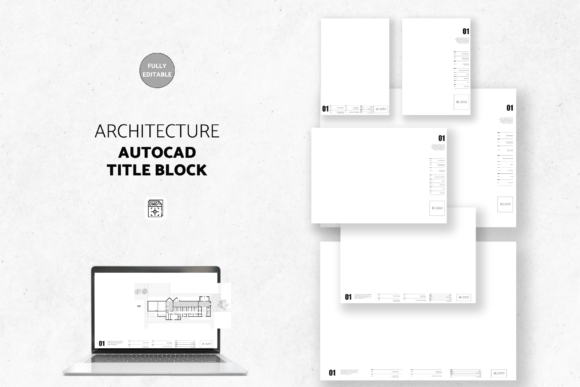
A title block serves as the identification card of a drawing. It contains critical information such as the project name, drawing number, revision history, scale, and the designer's details. However, creating these blocks from scratch for every project is a tedious process that consumes valuable billable hours. A well-designed CAD layout template solves this inefficiency by providing a standardized, pre-formatted framework. The specific package we are exploring here is designed to cover a comprehensive range of paper sizes, ensuring that you are prepared for any project scope. It includes 12 different versions of the title block template in .dwt format, covering ISO sizes A4, A3, and A2 in both Portrait and Landscape orientations. Furthermore, it includes 16 versions tailored for US standards, including Letter, Ledger/Tabloid, Arch C, and Arch D sizes.
The visual style of these templates strikes a balance between modern minimalism and technical necessity. Unlike cluttered, outdated title blocks that distract from the actual design, a modern template uses clean lines and ample white space. This "personality" of the template is crucial. It projects a sense of order and sophistication. When you present a set of drawings to a client or a contractor, the clean aesthetic of a high-quality title block subconsciously signals that you pay attention to details. It enhances the visual hierarchy of the sheet, ensuring that the architectural plans remain the focal point while the necessary metadata is easily accessible but not intrusive.
Practical Applications and Workflow Integration
The true strength of a standardized CAD template lies in its adaptability across various project types. For interior designers, these templates are perfect for laying out furniture plans, electrical layouts, and detailed joinery drawings. The consistent formatting ensures that when a set of drawings is sent to a furniture manufacturer or a contractor, the communication is seamless. For architects, the ability to switch between ISO and US standards without losing formatting integrity is a massive asset, particularly for firms working on international projects or collaborating with overseas consultants.
Consider the workflow of a small design studio or a freelance architect. Time spent on administrative setup is time lost on creative design. By utilizing a pre-built design asset like this, you can instantly acquire a professional setup and begin drawing within minutes. The package includes a PDF Guide, which is an essential component for ensuring that you can maximize the utility of the templates. This guide helps navigate the customization process, allowing you to tweak the templates to fit your specific brand identity. You can easily modify the layers, line weights, and text fields to match your company’s standards, ensuring consistency across all your commercial projects.
Elevating Brand Perception Through Standardization
In a competitive market, your brand identity extends beyond your logo and website; it permeates every document you produce. The drawings you submit for planning permission or construction bids are direct reflections of your professionalism. Using a sloppy or inconsistent title block can undermine the perceived quality of your work. Conversely, a clean, modern layout template reinforces your reputation for thoroughness.
Think of this template not just as a technical tool, but as a component of your broader visual strategy. Just as a graphic designer selects a specific typeface to convey a mood—be it a sturdy sans serif font for modernism or an elegant serif font for tradition—your technical drawings convey your operational competence. The structure provided by these templates ensures that your design assets are always presentation-ready. It eliminates the guesswork and formatting errors that often occur when starting from a blank canvas, allowing you to focus entirely on the creative and technical aspects of your work.
Choosing the Right Tools for Your Practice
When selecting a CAD template, it is important to look for versatility and ease of use. The inclusion of both Portrait and Landscape orientations across multiple standard sizes (A4, A3, A2, Letter, Ledger, Arch C, and Arch D) means you are equipped for everything from small detail sketches to large-scale site plans. This comprehensive coverage is vital for maintaining a unified look across a diverse portfolio of projects.
Ultimately, the goal is to streamline your production process without sacrificing quality. By integrating a professional Architecture Title Block Template into your workflow, you are investing in efficiency and presentation. It is a practical step that saves time, reduces errors, and elevates the standard of your deliverables, ensuring that your work is always communicated with the clarity and precision it deserves.