Mastering School Year Chaos with the 2026-2027 Kids School Year Planner
As we look ahead to the 2026-2027 academic cycle, the volume of information that students, parents, and educators must manage continues to grow. It is no longer enough to simply jot down homework assignments on a scrap piece of paper. Modern education requires a robust organizational system that can handle everything from standardized testing schedules to extracurricular tracking. The 2026-2027 Kids School Year Planner is designed specifically to meet this challenge. It functions not just as a calendar, but as a comprehensive command center for the academic year, blending functionality with a visual style that encourages daily use.
Visual Appeal and Design Philosophy
When evaluating any organizational tool, the "personality" of the design plays a crucial role in user adoption, particularly for younger students. The 2026-2027 Kids School Year Planner employs a strategy that balances structure with whimsy. It moves away from the sterile, corporate look of standard office planners and instead embraces a colorful, engaging layout. This approach is vital; if a planner feels like a chore, it will sit unused on a shelf. By incorporating vibrant color palettes and kid-friendly motifs, this planner encourages students to take ownership of their schedule.
The visual hierarchy is intuitive. The designers have used distinct typographic treatments to separate different types of data. For instance, headers for daily planners are likely rendered in a bold, legible display font, while spaces for notes or reflections might utilize a softer, more approachable sans serif font. This thoughtful typography ensures that the page is not visually cluttered, which is a common pitfall in planning tools that try to pack too much information onto a single page. The result is a clean aesthetic that supports readability and reduces cognitive load for the student.
Comprehensive Functionality: Beyond the Weekly Spread
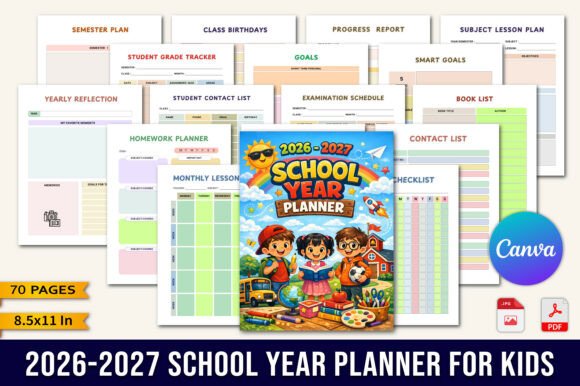
The true value of the 2026-2027 Kids School Year Planner lies in its depth. While a standard planner might offer a monthly view and a weekly spread, this resource dives much deeper into the ecosystem of student life. It recognizes that school is about more than just showing up; it is about tracking progress, managing resources, and setting goals. The inclusion of a dedicated Reading Log and Grade Tracker allows students to visualize their academic growth over time. This longitudinal view is essential for developing self-regulation skills.
Furthermore, the planner addresses the logistical side of education with features like the Examination Schedule and Project Planner. These tools help students break down large, intimidating tasks into manageable steps. For the parents and educators in our audience, the inclusion of a Teacher Contact List and Class Volunteers section is a practical blessing. It centralizes vital communication details, ensuring that when a deadline is approaching or a field trip is scheduled, the necessary information is at one's fingertips. The 2026-2027 Kids School Year Planner effectively bridges the gap between home and school environments.
Strategic Applications for Creatives and Entrepreneurs
Our audience includes designers, marketers, and small business owners, and the utility of this planner extends into your professional workflows as well. If you are a content creator in the education niche or a publisher of educational materials, the 2026-2027 Kids School Year Planner serves as a prime example of effective editorial design. It demonstrates how to structure complex information into an accessible, visually appealing format.
For those involved in brand identity or packaging design for children's products, this planner offers a masterclass in audience-appropriate aesthetics. The use of color, the balance of white space, and the integration of graphic elements reflect a modern approach to design assets. You can study the layout to understand how to create social media graphics that resonate with a family-oriented demographic. The planner’s style—playful yet structured—is a benchmark for modern typography in the education sector.
Leveraging the Digital Assets
One of the standout features of this product is its delivery method. The package includes Editable Canva Links and High-Quality Ready-to-Upload PDF Files. For the entrepreneur or digital nomad, this is a significant advantage. It means the 2026-2027 Kids School Year Planner is not a static file; it is a dynamic design asset. You can customize the templates to fit specific branding guidelines or client needs without needing advanced software like Adobe InDesign.
The inclusion of 70 Different Canva Templates suggests a modular approach to design. This variety allows you to mix and match components—perhaps using the Goal Tracker layout for a corporate wellness program or adapting the Reading Log for a book club. The versatility of these files makes them a valuable addition to any designer's toolkit, offering a foundation that can be repurposed for various commercial or personal projects.
Practical Guidance for Implementation
Implementing a tool like the 2026-2027 Kids School Year Planner requires a strategy to ensure it is used effectively. For parents, I recommend sitting down with the student at the start of the year to fill in the Full Year Calendar and School Timetable. This initial setup transforms the planner from a blank notebook into a personalized guide. Encourage the student to use the Achievements Rewards section to celebrate small wins, reinforcing positive habits.
For educators utilizing the Homeschool Goals or Class Schedule features, treat the planner as a living document. The Yearly Reflection page is particularly valuable; it encourages a growth mindset by prompting a review of what worked and what didn't. When choosing how to print or bind this planner, consider durability. Since it will be handled daily by children, a spiral binding or a sturdy cover is recommended to withstand the wear and tear of a backpack.
The Role of Typography in Education
It is worth noting the role of typeface selection in educational tools. The 2026-2027 Kids School Year Planner likely utilizes a clean sans serif font for body text, which is generally recommended for early readers due to its simplicity and lack of decorative serifs. However, the headers may feature a handwritten font or a script font to add personality. This pairing of a functional body font with a stylized header is a classic technique in web design and print layout to maintain interest without sacrificing legibility. As you use or adapt this planner, pay attention to how these typographic choices influence the user's ability to scan information quickly.
Ultimately, the 2026-2027 Kids School Year Planner is more than just a schedule keeper. It is a comprehensive toolkit for academic success, designed with a keen eye for aesthetics and a deep understanding of student needs. Whether you are a parent seeking order in the chaos of the school year, or a creative professional looking for inspiration in premium font usage and layout design, this planner delivers practical, high-quality solutions. It stands as a testament to how thoughtful design can transform the mundane task of planning into an engaging, productive experience.